M.E.A.T. Numina
It was great working with M.E.A.T. on Numina, this was my first time working with TouchDesigner and shaders which were a lot more computationally heavy than I thought so we couldn’t use a Raspberry PI for this one. On our first iteration of this project we were running on a tight schedule and no one noticed the misspelled “NUMANI” instead of “NUMINA” on like every other screen of the experience. I guess you could say we really put the ‘human’ in ‘NUMANI’ – human error, that is.
Idea
Taking inspiration from Zoltar and the experiments of the Kopfkino workshop, NUMINA invites audience members to recall memories through a series of prompts. As each prompt is answered, NUMINA develops a unique profile of the user. At the end of the experiment the user’s Numina, the spirit or divine power presiding over them, is revealed.
Pitch
Fortune telling and tailored experiences. Creating something that felt seamless and personalized to the user. Something very specific that no two people’s would get the same fortune / result.
Execution
When the user first approaches the installation, they are greeted by a set of headphones, a microphone, a screen, and a camera. Once the user is ready to begin (headphones on and microphone in hand), they hold a “peace sign” up towards the camera. This triggers the start of the experience. The user is then asked three individual questions. Their responses are recorded. As the questions progress, the background music intensifies. When the last question is answered, NUMINA generates a fortune and an “aura” (color) for the user based on their response. This completes the experience.
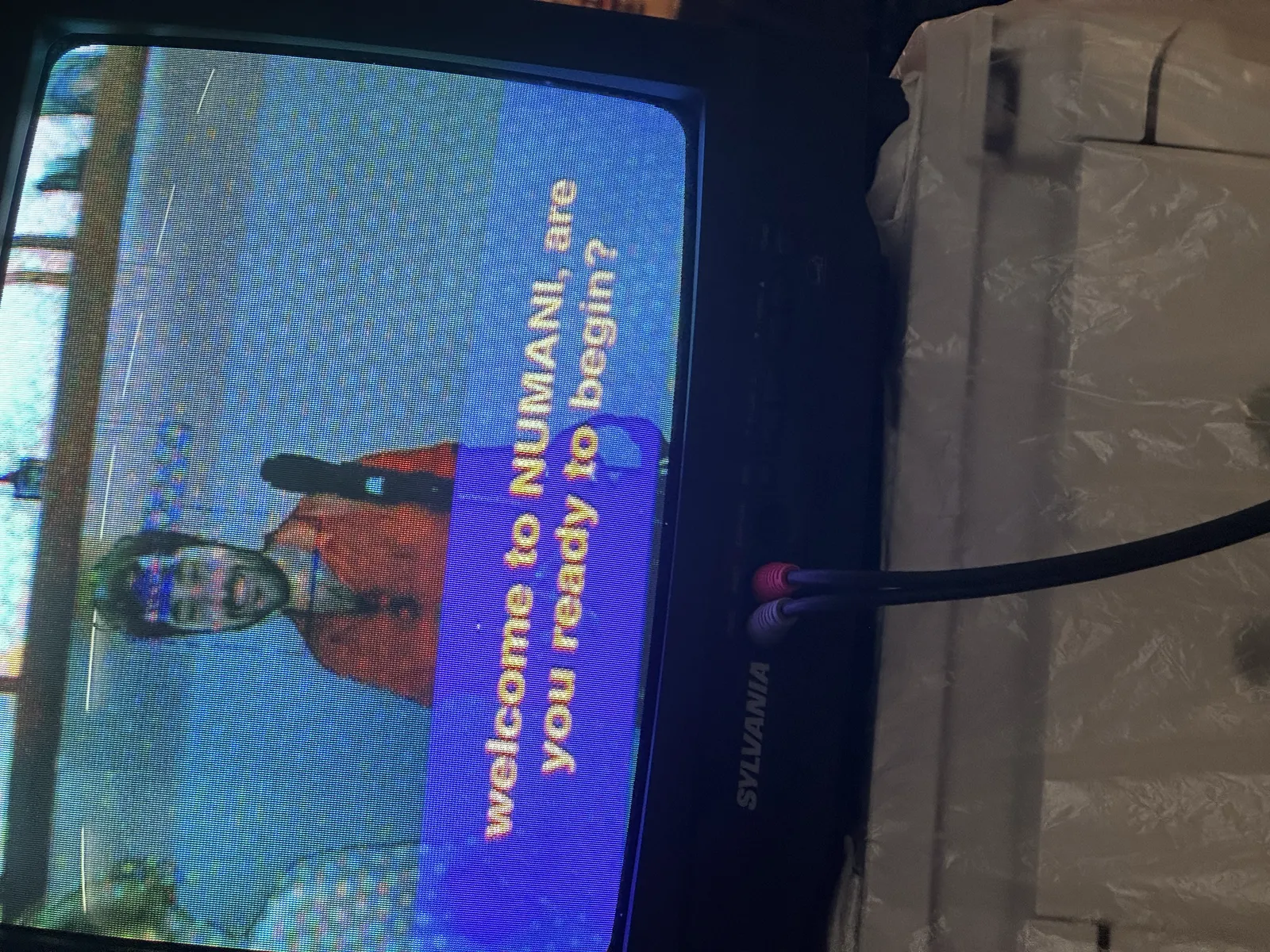
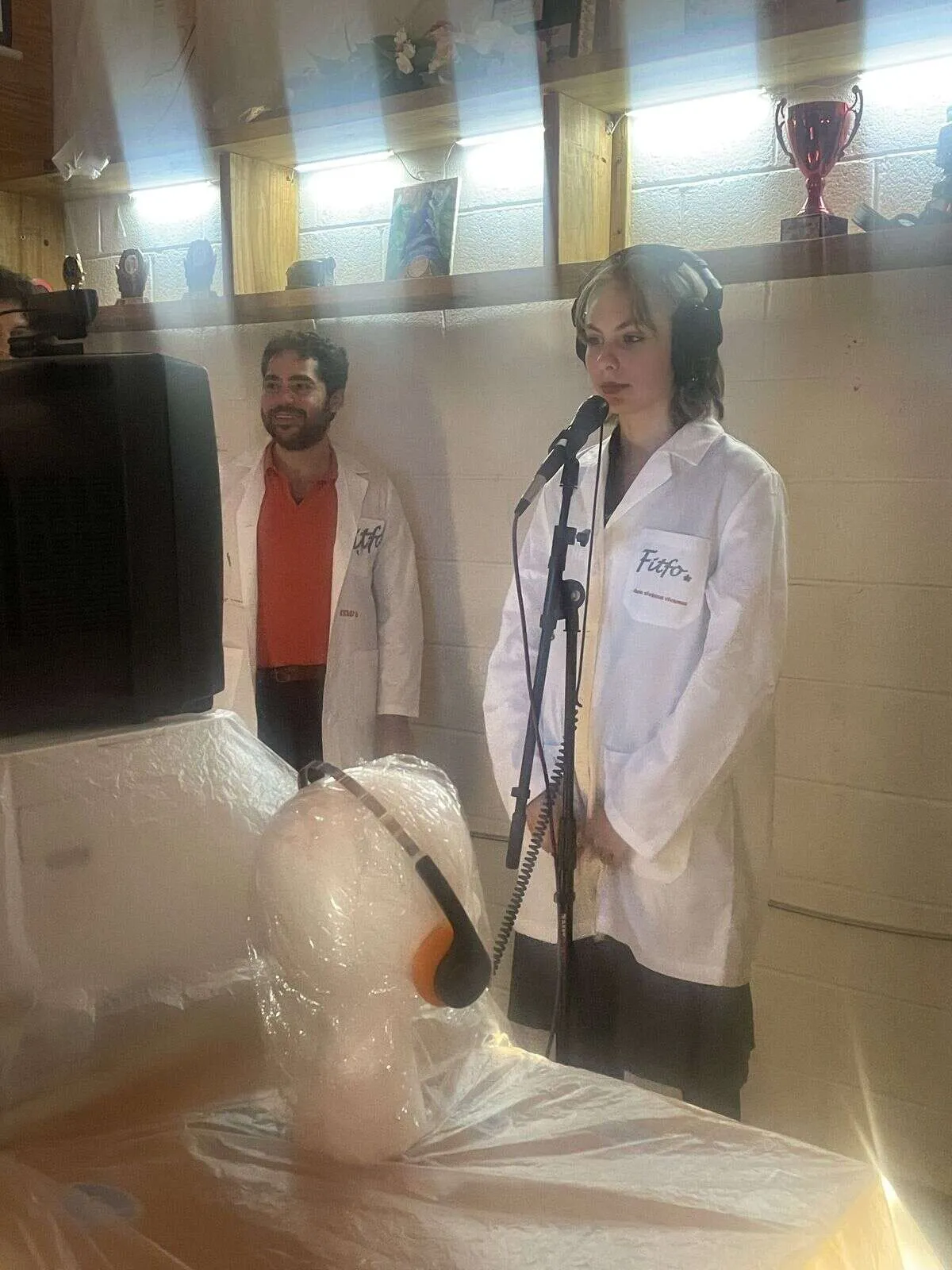
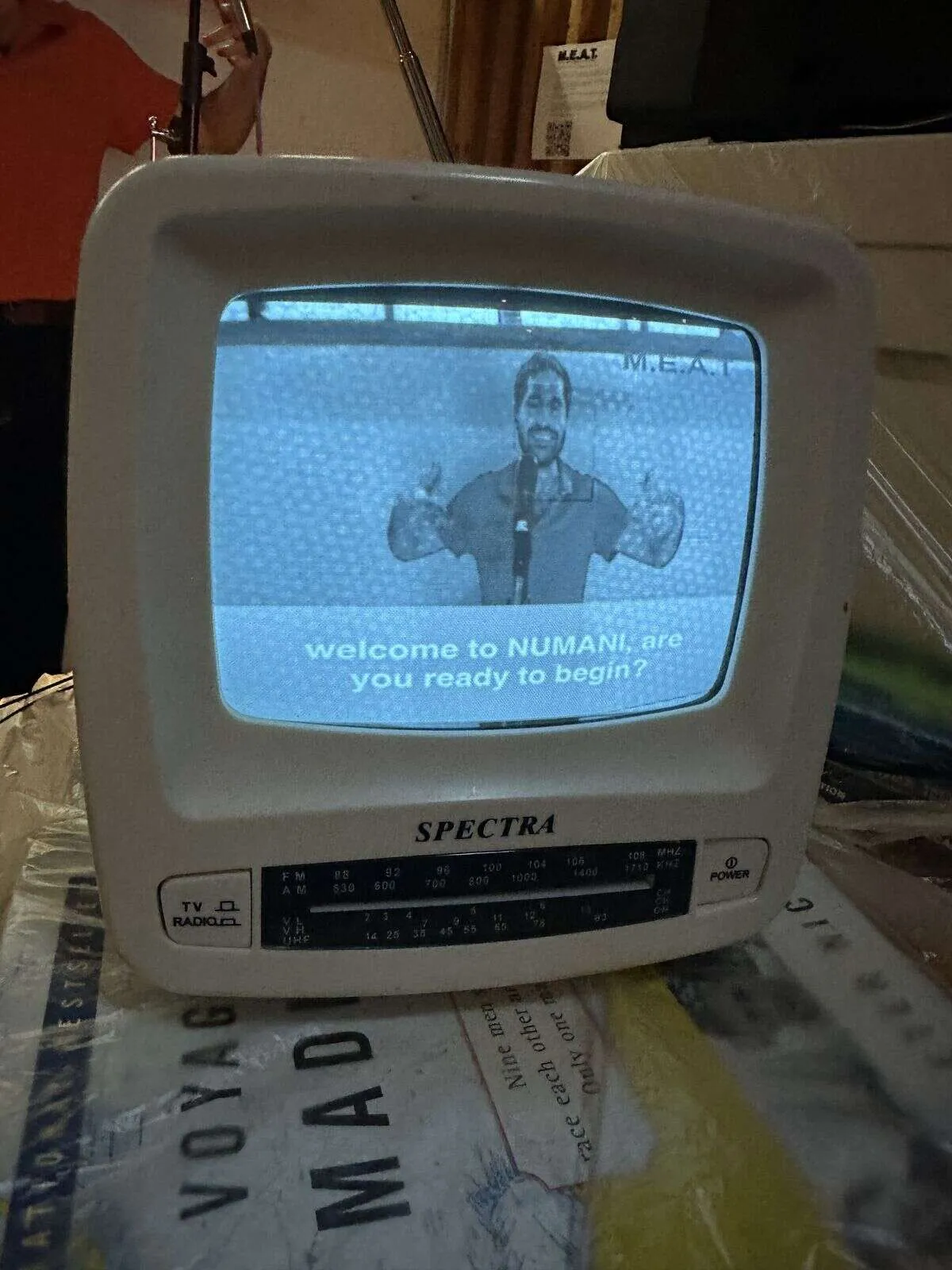
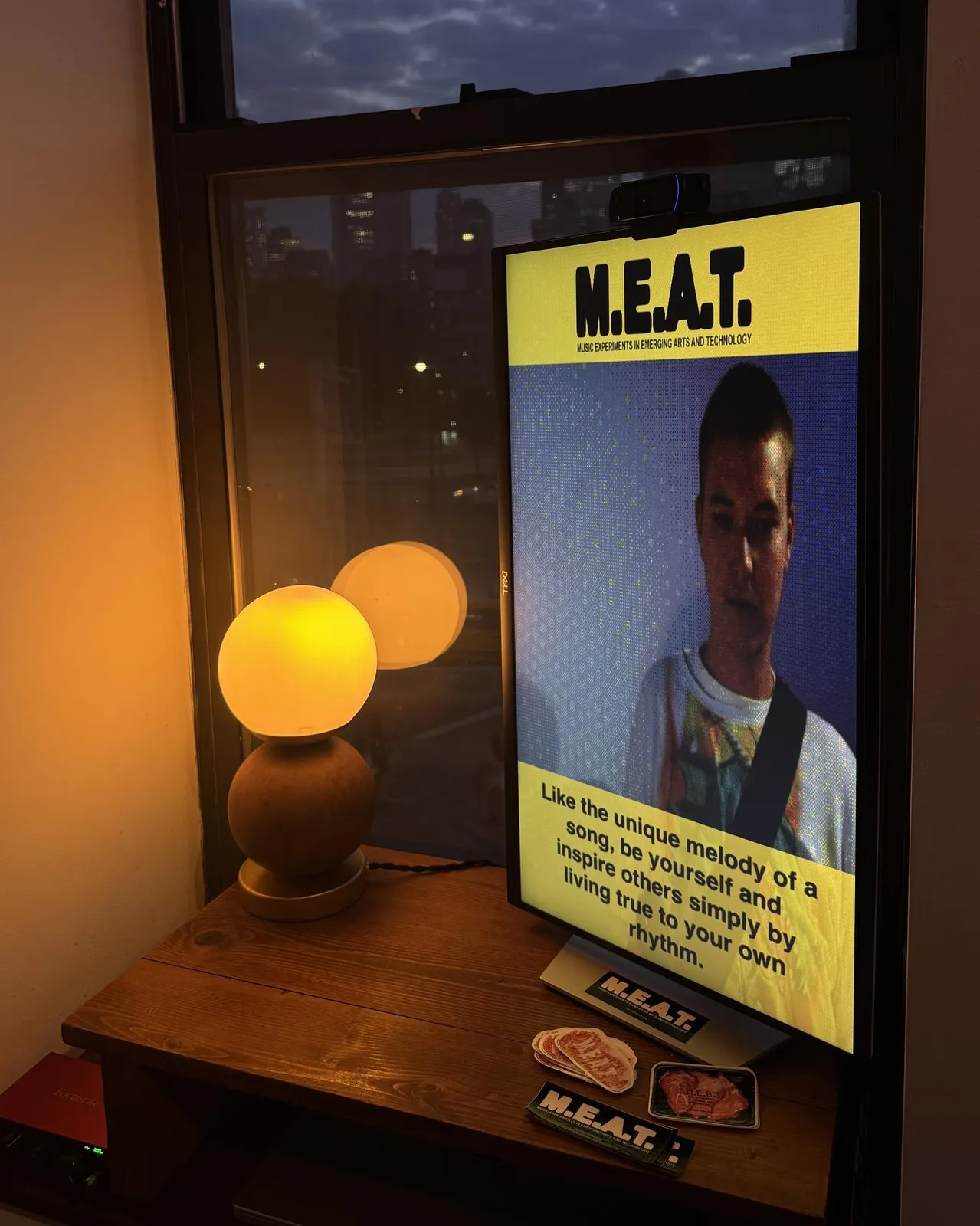 This was our most successful installment so far. The user interactions were amazing, and the people loved interacting with it and sharing their stories, thoughts and experiences even if it went past the recording limit we had in place. This version of Numina was running using ChatGPT to generate the responses, which was costing us some money and then would break Numina when we ran out of tokens.
Currently Numina runs on a local LLM that I trained to do exactly what we want and it works exponentially better. The response time from the local LLM is near instant and it makes the user experience much smoother, no longer do they have to wait for a whole minute for results generating.
The last step is to rewrite the Numina scene transition code because it’s a bit janky inside of TouchDesigner and I would like to move it to a Raspberry Pi or one of our weaker computers in the future.
We have opened a can of worms now that we have the ability to run our very own M.E.A.T. AI, because I have also incorporated it in SURVEIL for a spooky terminal experience like HAL or other scary movie AI’s.